_edited.png)
_edited.png)
Stress vs. Anxiety: Understanding the Difference Through Western Medicine and Traditional Chinese Medicine
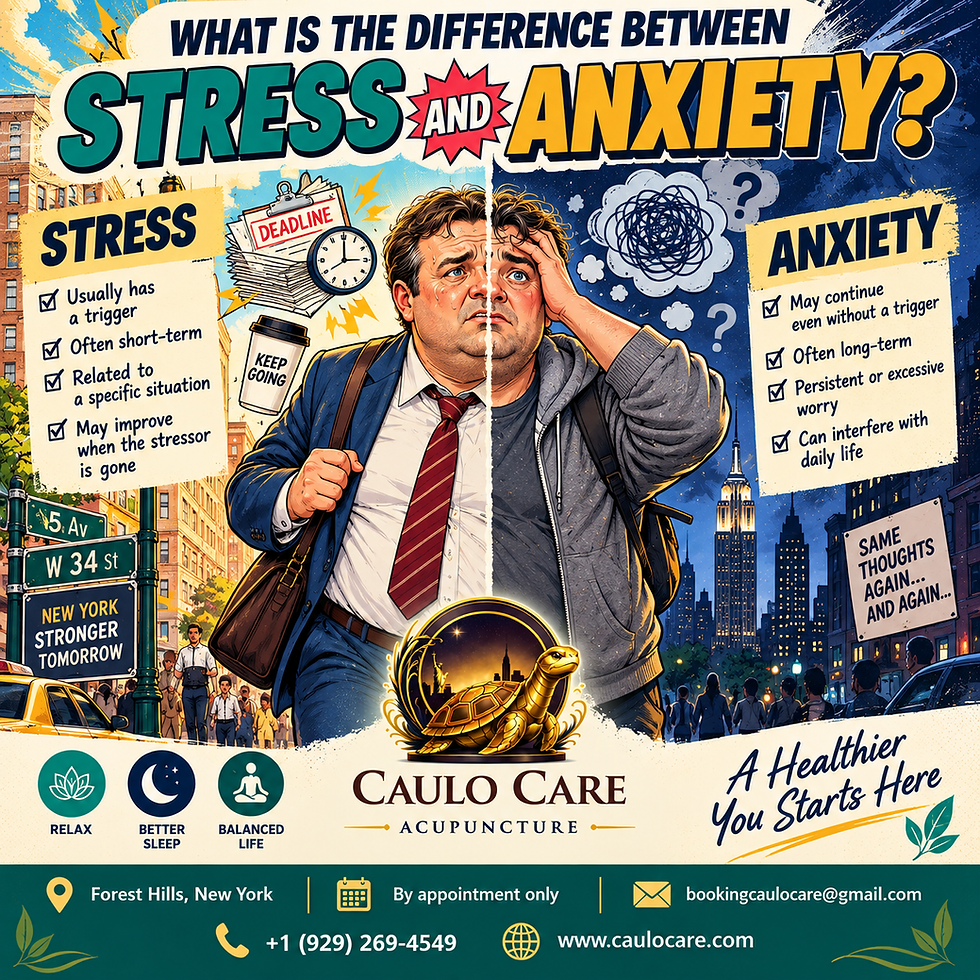
Stress and anxiety can feel very similar. Both may cause a racing mind, difficulty sleeping, muscle tension, headaches, fatigue, digestive discomfort, irritability, and difficulty concentrating. However, they are not exactly the same. Understanding the difference is important because the way we manage everyday stress may be different from the way an anxiety disorder should be evaluated and treated.
Stress vs. Anxiety: What Is the Difference?
Stress usually has an identifiable trigger. It may develop because of work pressure, financial problems, family responsibilities, illness, relationship difficulties, lack of sleep, or an upcoming deadline. When the stressful situation improves, the stress response often decreases.
Anxiety may continue even when there is no immediate danger or when the original stressful situation has already passed. Worry may become persistent, excessive, difficult to control, or disproportionate to the situation. When anxiety begins interfering with sleep, work, relationships, or everyday activities, professional evaluation becomes particularly important.
Stress and anxiety can also exist together. Long-term stress may keep the body in a heightened state of alert and can contribute to worsening emotional and physical symptoms.
What Happens Inside the Body? — A&P
From a Western anatomy and physiology perspective, stress activates the body's survival systems. The brain identifies a real or perceived threat and activates the sympathetic nervous system and the hypothalamic-pituitary-adrenal (HPA) axis. Stress hormones and neurotransmitters, including adrenaline and cortisol, help prepare the body to respond. Your heart may beat faster, breathing may become quicker, muscles tighten, attention becomes focused on potential danger, and digestion and sleep may be disrupted.
This response can be useful for a short period. The problem occurs when the system remains activated too frequently or for too long.
Chronic stress may contribute to persistent muscle tension, headaches, neck and shoulder discomfort, poor sleep, fatigue, digestive symptoms, and difficulty concentrating. Stress-related behaviors, such as excessive caffeine use, overeating, alcohol use, or insufficient sleep, can further intensify the cycle.
Anxiety can involve many of the same physiological pathways, but the brain's threat-detection system may remain highly responsive even when there is no immediate external danger.
The Traditional Chinese Medicine Perspective
Traditional Chinese Medicine (TCM) describes stress and anxiety using a different medical framework. Rather than diagnosing everyone with one identical pattern, TCM evaluates the individual's combination of emotional and physical symptoms, sleep, digestion, energy, tongue, pulse, and other findings. Common TCM patterns associated with stress-related symptoms may involve Liver Qi stagnation, Heart Shen disturbance, Spleen Qi deficiency, or other individualized patterns.
For example, emotional tension may be accompanied by tight shoulders, headaches, irritability, digestive discomfort, fatigue, restlessness, or difficulty sleeping.
In TCM terminology, treatment therefore focuses on identifying the individual's pattern rather than treating the word “stress” alone.
What Can You Do at Home?
The first step is to identify what may be driving your symptoms. Consider your workload, sleep, caffeine intake, relationships, physical activity, screen habits, and whether there is a specific stressor that can be modified. Regular physical activity, consistent sleep and wake times, relaxation or breathing exercises, time outdoors, and maintaining supportive social relationships can help regulate the stress response. Try not to depend on excessive caffeine, energy drinks, alcohol, smoking, overeating, or recreational drugs to manage stress. These strategies may temporarily change how you feel while potentially worsening sleep, anxiety, or overall health. If symptoms persist, become severe, or interfere with normal life, self-care alone may not be sufficient. Psychotherapy, including approaches such as cognitive behavioral therapy (CBT), and medication when clinically appropriate are established components of anxiety treatment.
Food and Nutrition
Nutrition should support overall health rather than be viewed as a cure for stress or anxiety.
Focus on regular, balanced meals containing vegetables, fruits, whole grains, adequate protein, healthy fats, and sufficient fluids. Foods naturally containing magnesium, B vitamins, omega-3 fatty acids, and other essential nutrients can be part of a balanced diet.
Examples include leafy green vegetables, beans, nuts and seeds, whole grains, eggs, fish, and other nutrient-dense foods appropriate for your health needs.
Vitamin or mineral supplements should not automatically be taken simply because you feel stressed. Deficiencies and supplementation needs vary, and excessive doses can cause problems or interact with medications. Discuss supplements with an appropriate healthcare professional when necessary.
Where Does Acupuncture Fit?
Acupuncture should be considered a complementary approach, not a replacement for appropriate medical or mental-health care.
At Caulo Care Acupuncture, treatment is individualized according to the patient's symptoms and TCM assessment. For people whose stress is accompanied by physical symptoms—such as neck and shoulder tension, muscle tightness, headaches, sleep difficulty, or stress-related discomfort—acupuncture may be incorporated into a broader plan aimed at supporting relaxation and helping manage pain and related symptoms.
This is particularly important because stress is not experienced only in the mind. For many people, it is also experienced physically: the shoulders stay elevated, the jaw remains tight, the neck becomes stiff, sleep becomes difficult, and pain can become part of the stress cycle.
Our goal is not simply to label the symptom as “stress.” We look at the relationship between stress, sleep, muscle tension, pain, and the body's overall pattern and develop an individualized acupuncture treatment plan. If stress keeps showing up in your neck, shoulders, head, jaw, sleep, or body, addressing the physical component may be an important part of your overall care.
When Should You Seek Medical Help?
Do not automatically assume that chest pain, shortness of breath, palpitations, severe headaches, dizziness, or other significant physical symptoms are “just anxiety.” These symptoms can have other medical causes and may require prompt evaluation.
Persistent or severe anxiety, panic attacks, major changes in daily functioning, or symptoms affecting your ability to work, sleep, or maintain relationships should be discussed with a qualified medical or mental-health professional.
Caulo Care Acupuncture
Doctor of Acupuncture / Chinese Medicine
Caulo Care Acupuncture | Forest Hills, New York
🔖 By appointment only
☎️ +1 (929) 269-4549
🔶🔷🔶🔷🔶🔷🔶🔷🔶🔷🔶🔷
Medical Disclaimer:This information is provided for educational purposes only and should not be construed as medical advice, diagnosis, or treatment. Healthcare recommendations must be individualized, and the suggestions discussed here may not be appropriate for everyone. Please consult an appropriate physician, mental-health professional, or other qualified healthcare provider for medical advice, diagnosis, and treatment.
References
American Psychological Association. What’s the Difference Between Stress and Anxiety?
University of Missouri Health Care. Is It Stress or Anxiety? 5 Ways to Tell the Difference.
Psychiatry of SA. Stress vs. Anxiety: How to Tell the Difference & When to See a Psychiatrist.
Mental Health Association in Delaware. Stress vs. Anxiety: What Is the Difference?
#StressVsAnxiety #StressManagement #AnxietyAwareness #ChronicStress #StressRelief #NeckPain #ShoulderPain #MuscleTension #SleepHealth #Acupuncture #AcupunctureNYC #AcupunctureQueens #ForestHillsAcupuncture #TraditionalChineseMedicine #TCM #PainManagement #StressAcupuncture #HolisticHealth #IntegrativeHealth #CauloCare #DrCaulo #DrCAcupuncture #QueensNY #NewYorkAcupuncture #Massage #NoFault


Comments