_edited.png)
_edited.png)
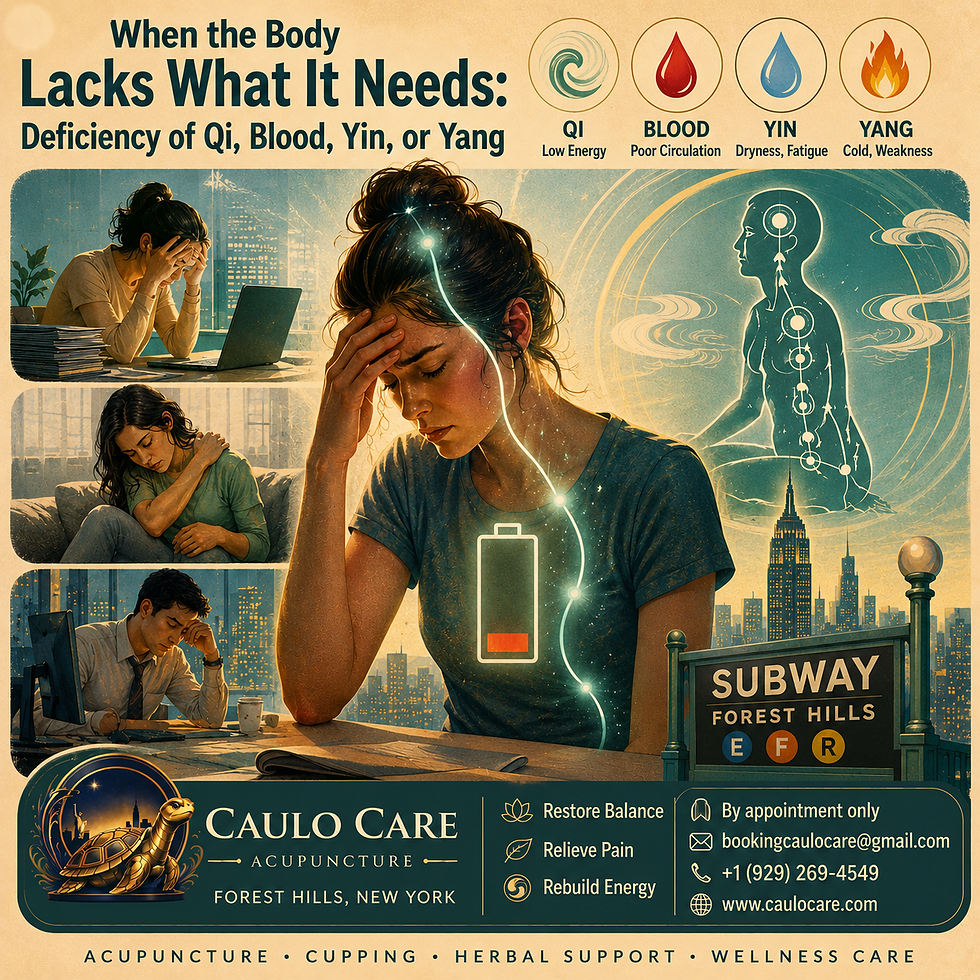
When the Body Lacks What It Needs: Deficiency of Qi, Blood, Yin, or Yang
By Dr. Phumlarp Caulo, L.Ac., MAc., OM, DAHM
Doctor of Acupuncture & Chinese Medicine Caulo Care Acupuncture – Forest Hills, New York
Many people experience persistent fatigue, weakness, poor recovery, dizziness, or chronic pain without understanding the underlying cause. In Traditional Chinese Medicine (TCM), one of the most common explanations is Deficiency (Xu, 虚). This means the body does not have enough of its essential physiological substances—Qi, Blood, Yin, or Yang—or these substances are present but cannot be distributed efficiently throughout the body.
From a Western medicine perspective, similar symptoms may be associated with inadequate energy production, poor circulation, nutritional deficiencies, hormonal imbalance, autonomic nervous system dysregulation, chronic inflammation, poor sleep quality, or prolonged physical and emotional stress. When the body's repair systems cannot keep up with daily demands, symptoms gradually develop.
Understanding the Body: Western A&P and TCM
In Western anatomy and physiology (A&P), every cell depends on oxygen, nutrients, hormones, blood circulation, and nerve signals to produce energy (ATP) and maintain normal function. When these systems become inefficient, tissues receive less support, healing slows, muscles fatigue more easily, and the nervous system becomes more sensitive to pain.
In TCM:
Qi provides energy and drives all physiological functions.
Blood nourishes muscles, organs, tendons, and the brain.
Yin supplies cooling, moisture, and restorative functions.
Yang provides warmth, metabolism, circulation, and movement.
Even if these substances are present, poor circulation or impaired distribution prevents tissues from receiving adequate nourishment, leading to fatigue, stiffness, discomfort, and reduced resilience.
Common Causes
Deficiency often develops gradually from:
Chronic stress or burnout
Overwork without adequate recovery
Poor nutrition
Inadequate sleep
Chronic illness or prolonged inflammation
Aging
Excessive physical or emotional strain
Signs You May Notice
Persistent fatigue
Muscle weakness
Brain fog
Poor concentration
Dizziness
Slow recovery
Cold hands and feet or feeling unusually warm at night
Chronic muscle tension or body aches
Prevention and Self-Care
Healthy recovery begins with restoring the body's ability to heal.
Do:
Prioritize consistent, restorative sleep.
Eat balanced meals rich in protein, vegetables, healthy fats, and whole grains.
Stay hydrated.
Exercise regularly without overtraining.
Practice stress management through breathing exercises, meditation, or gentle movement.
Maintain a regular daily routine.
Avoid:
Chronic sleep deprivation
Skipping meals
Excessive caffeine or alcohol
Continuous overwork without recovery
Ignoring persistent symptoms
Nutrition: Western and Eastern Perspectives
Western Nutrition
Support energy production with foods containing:
Iron (lean meat, spinach, legumes)
Vitamin B12
Folate
Vitamin D
Magnesium
Omega-3 fatty acids
High-quality protein
These nutrients support oxygen transport, nerve function, muscle repair, immune health, and cellular energy production.
Eastern Nutrition (TCM)
TCM emphasizes nourishing the body's deficiencies through warm, easily digested foods.
Examples include:
Bone broth
Chicken soup
Ginger
Red dates (Jujube)
Goji berries
Black sesame
Sweet potato
Oats
Chinese yam (Shan Yao)
These foods are traditionally believed to help replenish Qi, nourish Blood, strengthen the Spleen, and support Kidney energy.
How Acupuncture May Help
Acupuncture is commonly used to support the body's natural healing processes by promoting circulation, regulating the nervous system, reducing muscle tension, improving relaxation, and helping restore functional balance. Many patients seek acupuncture for chronic pain, stress-related conditions, fatigue, and musculoskeletal discomfort as part of a comprehensive care plan.
At Caulo Care Acupuncture in Forest Hills, New York, treatment plans are individualized based on each patient's symptoms, health history, and TCM pattern differentiation. Our goal is to help reduce pain, improve function, support recovery, and enhance overall well-being.
Educational Disclaimer
This information is provided for educational purposes only and should not be construed as medical advice. Every individual is different, and these recommendations may not be appropriate for everyone. Please consult a qualified healthcare professional for medical evaluation, diagnosis, or treatment.
BOOK AN APPOINTMENT NOW!
By Dr. Phumlarp Caulo, L.Ac., MAc., OM, DAHM
Doctor of Acupuncture & Chinese Medicine
Caulo Care Acupuncture – Forest Hills, New York
🔖 By appointment only
☎️ +1 (929) 269-4549
References
Maciocia G. The Foundations of Chinese Medicine. 3rd Edition. Elsevier.
World Health Organization (WHO). WHO Benchmarks for the Practice of Acupuncture.
National Center for Complementary and Integrative Health (NCCIH). Acupuncture: What You Need To Know.
Hall JE. Guyton and Hall Textbook of Medical Physiology. Elsevier.
Kumar, Abbas & Aster. Robbins & Cotran Pathologic Basis of Disease. Elsevier.
#QiDeficiency #BloodDeficiency #YinDeficiency #YangDeficiency #TraditionalChineseMedicine #TCM #Fatigue #ChronicFatigue #Burnout #PainRelief #Acupuncture #AcupunctureNearMe #ForestHills #QueensNY #NewYork #Wellness #NaturalHealing #NervousSystem #ChronicPain #CauloCare #DrPhumlarpCaulo #NoFault #Massage #StressRelief


Comments