_edited.png)
_edited.png)
Xu Lao (虚劳): Why Chronic Fatigue Happens — A Western & Traditional Chinese Medicine Perspective

Caulo Care Acupuncture – Forest Hills, New York
What Is Xu Lao (虚劳)?
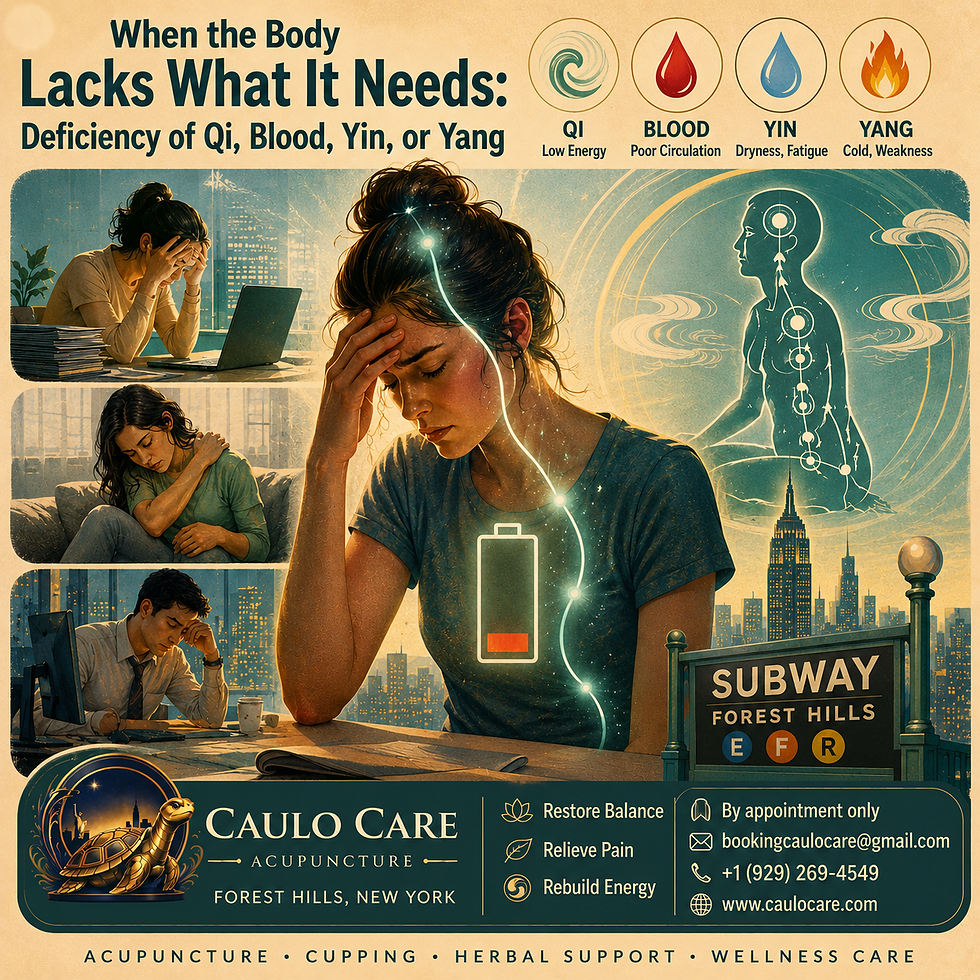
In Traditional Chinese Medicine (TCM), persistent fatigue is commonly classified as Xu Lao (虚劳), often translated as "consumptive deficiency syndrome" or "deficiency caused by prolonged overwork." It develops when the body is gradually weakened by excessive physical or mental work, chronic stress, insufficient recovery, poor nutrition, aging, or long-term illness. Over time, the body's Qi (vital energy), Blood, Yin, and Yang become depleted, reducing the body's ability to heal, recover, and maintain normal physiological function.
From a Western medicine perspective, chronic fatigue is not a disease itself but a symptom that may result from inadequate sleep, prolonged stress, overtraining, nutritional deficiencies, endocrine disorders, chronic inflammation, infection, anemia, depression, or other underlying medical conditions.
Anatomy & Physiology (A&P): Why Does Fatigue Occur?
Fatigue develops when the body's energy production and recovery systems cannot meet daily demands.
Western Medicine
Chronic stress activates the Hypothalamic–Pituitary–Adrenal (HPA) Axis, leading to prolonged cortisol release. Persistent activation may contribute to:
Autonomic nervous system imbalance
Increased inflammation
Reduced mitochondrial energy production
Hormonal dysregulation
Poor sleep quality
Muscle tension and pain
Impaired immune function
When these systems become overwhelmed, both physical and mental fatigue gradually worsen.
Traditional Chinese Medicine
TCM views fatigue as an imbalance of the body's fundamental substances:
Qi Deficiency – low energy and reduced stamina
Blood Deficiency – poor nourishment of muscles and brain
Yin Deficiency – depletion from chronic stress or overwork, often accompanied by insomnia or heat sensations
Yang Deficiency – reduced metabolic warmth and persistent exhaustion
Long-standing deficiency eventually affects multiple organ systems, particularly the Spleen, Heart, Lung, Kidney, and Liver.
Common Causes
Western
Chronic psychological stress
Sleep deprivation
Overwork
Poor nutrition
Iron, Vitamin B12, Vitamin D, or Magnesium deficiency
Chronic illness
Hormonal disorders
Depression or anxiety
Traditional Chinese Medicine
Excessive work without adequate rest
Emotional strain
Long-term illness
Improper diet
Aging
Constitutional weakness
Prevention & Self-Care
Recommended
Maintain consistent sleep habits.
Exercise moderately without overtraining.
Eat balanced meals rich in protein, vegetables, and healthy fats.
Practice stress management through meditation, breathing exercises, or Tai Chi.
Stay hydrated.
Schedule regular recovery days.
Avoid
Working long hours without breaks
Chronic sleep deprivation
Excessive caffeine or alcohol
Highly processed foods
Ignoring persistent fatigue
Exercising intensely when already exhausted
Nutrition
Western Nutrition
Focus on nutrients involved in cellular energy production:
Lean protein
Omega-3 fatty acids
Iron-rich foods
Vitamin B12
Vitamin D
Magnesium
Complex carbohydrates
Antioxidant-rich fruits and vegetables
Eastern (TCM) Dietary Principles
Foods that help support Qi and Blood include:
Bone broth
Chicken soup
Chinese dates (Jujube)
Goji berries
Black sesame
Sweet potatoes
Pumpkin
Oats
Millet
Warm cooked meals rather than excessive cold foods
Nutrition should always be individualized according to each person's constitution.
How Acupuncture May Help
Acupuncture is commonly used to support individuals experiencing chronic fatigue, stress-related disorders, muscle tension, and persistent pain. Treatment aims to:
Promote relaxation
Help regulate the autonomic nervous system
Improve circulation
Reduce muscle tightness and pain
Support better sleep quality
Enhance recovery from chronic stress
Restore balance of Qi according to Traditional Chinese Medicine
At Caulo Care Acupuncture, treatment plans are individualized after a comprehensive assessment using both modern clinical reasoning and Traditional Chinese Medicine principles. Many patients seek acupuncture to reduce pain, improve physical function, and support overall well-being as part of a comprehensive care plan.
Educational Disclaimer
This information is intended for educational purposes only and should not be considered medical advice. Every individual is different, and these recommendations may not apply to your specific condition. Please consult a qualified healthcare professional for diagnosis and personalized treatment.
BOOK AN APPOINTMENT NOW!
Dr. Phumlarp Caulo, L.Ac., MAc., OM, DAHM
Doctor of Acupuncture & Chinese Medicine
Caulo Care Acupuncture
🔖 By appointment only
☎️ +1 (929) 269-4549
References
Maciocia G. The Foundations of Chinese Medicine. 3rd ed.
Wiseman N, Ellis A. Fundamentals of Chinese Medicine.
World Health Organization (WHO). Traditional Medicine Strategy.
National Institutes of Health (NIH). Office of Dietary Supplements.
National Center for Complementary and Integrative Health (NCCIH). Acupuncture.


Comments