_edited.png)
_edited.png)
Graves’ Disease and Hyperthyroidism: Understanding the Condition Through Western Medicine and Traditional Chinese Medicine (TCM)
Caulo Care Acupuncture – Forest Hills, New York
The thyroid gland is a small butterfly-shaped endocrine gland located at the front of the neck. Despite its size, it plays a critical role in regulating metabolism, energy production, body temperature, heart rate, digestion, mood, and overall physiologic balance. The thyroid produces two primary hormones, triiodothyronine (T3) and thyroxine (T4), which act as the body's metabolic regulators. When these hormones are produced in excessive amounts, the body enters a hypermetabolic state known as hyperthyroidism. One of the most common causes of hyperthyroidism is Graves’ disease.
What Is Graves’ Disease?
Graves’ disease is an autoimmune disorder in which the immune system mistakenly attacks the thyroid gland. Instead of protecting the body from infection, the immune system produces antibodies that stimulate the thyroid gland to produce excessive thyroid hormones. As a result, the thyroid becomes overactive, leading to hyperthyroidism.Although the exact cause is not fully understood, several risk factors have been identified, including genetic predisposition, family history, female gender, smoking, and significant emotional or physical stress.
Understanding the Anatomy and Physiology (A&P)
Under normal circumstances, the hypothalamus and pituitary gland regulate thyroid function through a feedback system. The pituitary gland releases Thyroid Stimulating Hormone (TSH), which signals the thyroid gland to produce T3 and T4. These hormones regulate how the body uses oxygen and converts food into energy.
In Graves’ disease, thyroid-stimulating immunoglobulins (TSI) continuously activate thyroid receptors, bypassing normal feedback control. The thyroid gland becomes overstimulated, producing excessive amounts of T3 and T4, causing virtually every organ system to function at an accelerated pace.
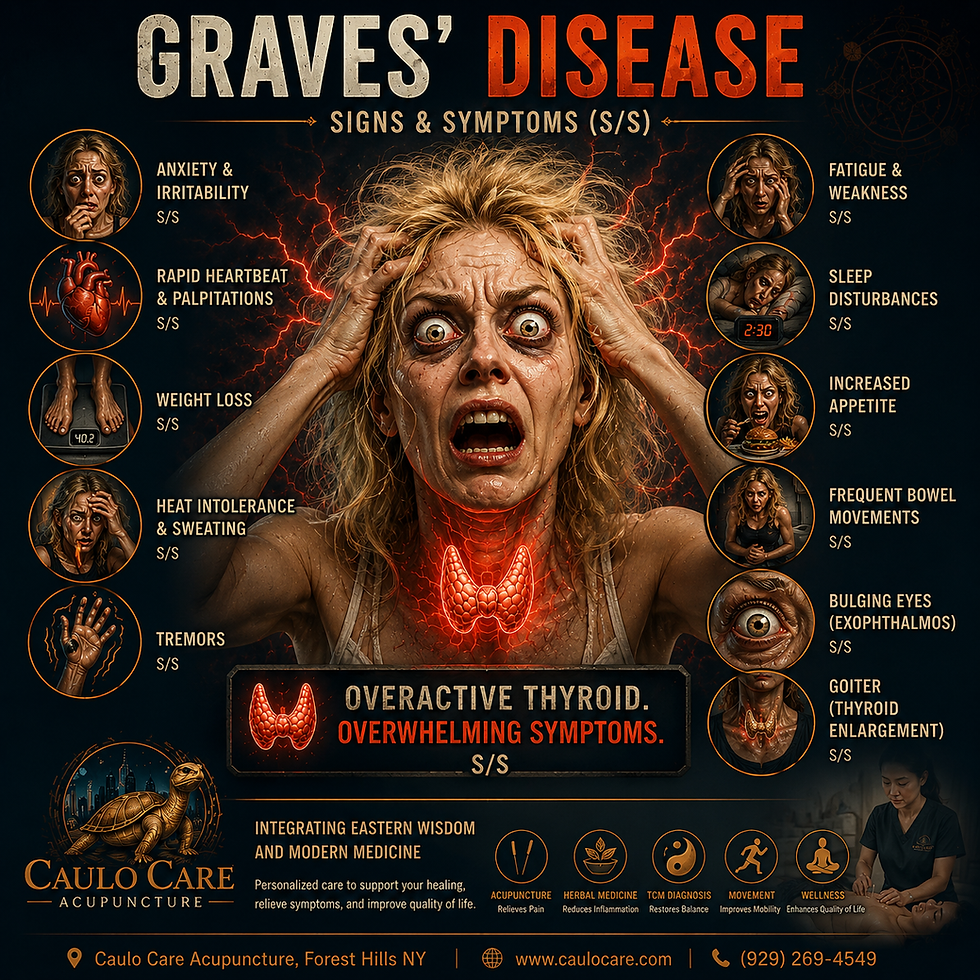
This explains why patients often experience:
Rapid heartbeat or palpitations
Anxiety and irritability
Tremors
Heat intolerance
Excessive sweating
Weight loss despite normal appetite
Frequent bowel movements
Fatigue and muscle weakness
Goiter (thyroid enlargement)
Eye symptoms such as bulging eyes, eye irritation, and double vision
When left untreated, severe hyperthyroidism may progress to a life-threatening emergency known as Thyroid Storm, characterized by extreme fever, severe tachycardia, altered mental status, and cardiovascular instability.
Graves’ Disease Through the Lens of Traditional Chinese Medicine (TCM)
Traditional Chinese Medicine does not classify Graves’ disease as a single disease entity. Instead, practitioners evaluate patterns of imbalance within the body.
Common TCM patterns associated with Graves’ disease include:
Liver Yang Rising
Liver Fire Blazing
Yin Deficiency with Empty Heat
Heart and Liver Fire
Phlegm-Fire Disturbing the Mind
Qi and Yin Deficiency
Phlegm Accumulation in the Neck Region
From a TCM perspective, prolonged emotional stress, frustration, overwork, insufficient rest, and constitutional weakness may disrupt the smooth flow of Qi and Blood. Over time, internal Heat and Fire may develop, accelerating physiologic functions and contributing to symptoms such as palpitations, insomnia, anxiety, irritability, sweating, and weight loss.
Many patients with Graves’ disease present with a combination of Excess (Heat, Fire, Yang Rising) and Deficiency (Yin and Qi depletion), requiring individualized treatment strategies.
Western Medical Treatment
The goals of treatment are to reduce excessive thyroid hormone production and manage symptoms.
Common treatments include:
Anti-Thyroid Medications
Methimazole
Propylthiouracil (PTU)
Symptom Control
Beta-blockers for rapid heart rate and tremors
Radioactive Iodine Therapy
Used to gradually destroy overactive thyroid tissue.
Thyroid Surgery
Partial or total thyroidectomy may be recommended in selected cases.
Eye Disease Management
Patients with Graves’ ophthalmopathy may require:
Lubricating eye drops
Protective eyewear
Elevation of the head during sleep
Anti-inflammatory medications
Surgical intervention in severe cases
Nutrition and Lifestyle Recommendations
Helpful Habits
Prioritize adequate sleep
Engage in stress-management practices
Maintain regular follow-up with your endocrinologist
Avoid smoking, which may worsen Graves’ disease and thyroid eye disease - Stay hydrated
Practice moderate exercise when medically appropriate
Foods That May Support Overall Health
Colorful vegetables
Berries
Omega-3-rich fish
Nuts and seeds
Lean proteins
Whole grains
Selenium-containing foods such as Brazil nuts, eggs, and seafood
Vitamin D-rich foods when appropriate
Foods and Habits to Use With Caution
Patients should consult their physician before making major dietary changes, especially regarding iodine intake.
Depending on individual circumstances, excessive intake of:
Kelp
Seaweed supplements
High-dose iodine products
Excessive stimulant use
Tobacco products
may require additional medical guidance.
Self-Care at Home
Individuals living with Graves’ disease can support their health by:
Taking medications exactly as prescribed
Monitoring symptoms
Tracking heart rate
Attending laboratory follow-up appointments
Protecting the eyes from wind and excessive sunlight
Using artificial tears if recommended
Sleeping with the head elevated when eye swelling is present
Seeking immediate medical care if experiencing chest pain, severe palpitations, difficulty breathing, vision changes, or signs of Thyroid Storm
Can Acupuncture Help?
Acupuncture is not a replacement for medical treatment of Graves’ disease, nor should it be used as a substitute for endocrinology care. However, many patients seek acupuncture as a complementary therapy to help manage symptoms associated with hyperthyroidism and improve overall quality of life.
At Caulo Care Acupuncture, treatment plans are individualized based on both Traditional Chinese Medicine pattern differentiation and the patient's current medical condition. Depending on the individual presentation, acupuncture may help support:
Stress reduction
Relaxation and nervous system regulation
Sleep quality
Neck and shoulder tension
Headaches
Muscle discomfort
Overall well-being
Recovery from chronic stress associated with long-term illness
From a TCM perspective, acupuncture aims to restore balance, regulate Qi and Blood circulation, calm excessive internal Heat, nourish Yin, and support the body's natural healing mechanisms.
For patients experiencing neck tension, headaches, muscle discomfort, stress-related symptoms, or chronic pain associated with Graves’ disease, acupuncture may be a valuable complementary option when integrated with appropriate medical care.
Final Thoughts
Graves’ disease is the most common autoimmune cause of hyperthyroidism. It occurs when the immune system overstimulates the thyroid gland, causing excessive production of thyroid hormones and accelerating many body functions. Early diagnosis, appropriate medical treatment, healthy lifestyle habits, stress management, and regular monitoring can significantly improve outcomes and quality of life.
A balanced approach that integrates evidence-based Western medicine with supportive therapies such as Traditional Chinese Medicine and acupuncture may help patients manage symptoms more effectively while supporting their overall health and well-being.
Educational Disclaimer
This information is intended for educational purposes only and should not be construed as medical advice, diagnosis, or treatment. Every individual is different, and the information presented may not apply to your specific situation. Always consult a qualified physician, endocrinologist, or other licensed healthcare professional regarding any medical condition, diagnosis, treatment, or health concerns.
BOOK AN APPOINTMENT NOW!
Caulo Care AcupunctureForest Hills, Queens, New York
Doctor of Acupuncture & Chinese Medicine
☎️ +1 (929) 269-4549
By Appointment Only
Acupuncture Near Me in Forest Hills, NY
#DrCAcupuncture #DrCaulo #Acupuncture #ForestHillsNY #QueensNY #Hyperthyroidism #GravesDisease #TraditionalChineseMedicine #IntegrativeMedicine #HolisticHealth #AcupunctureNearMe #CauloCare


Comments