_edited.png)
_edited.png)
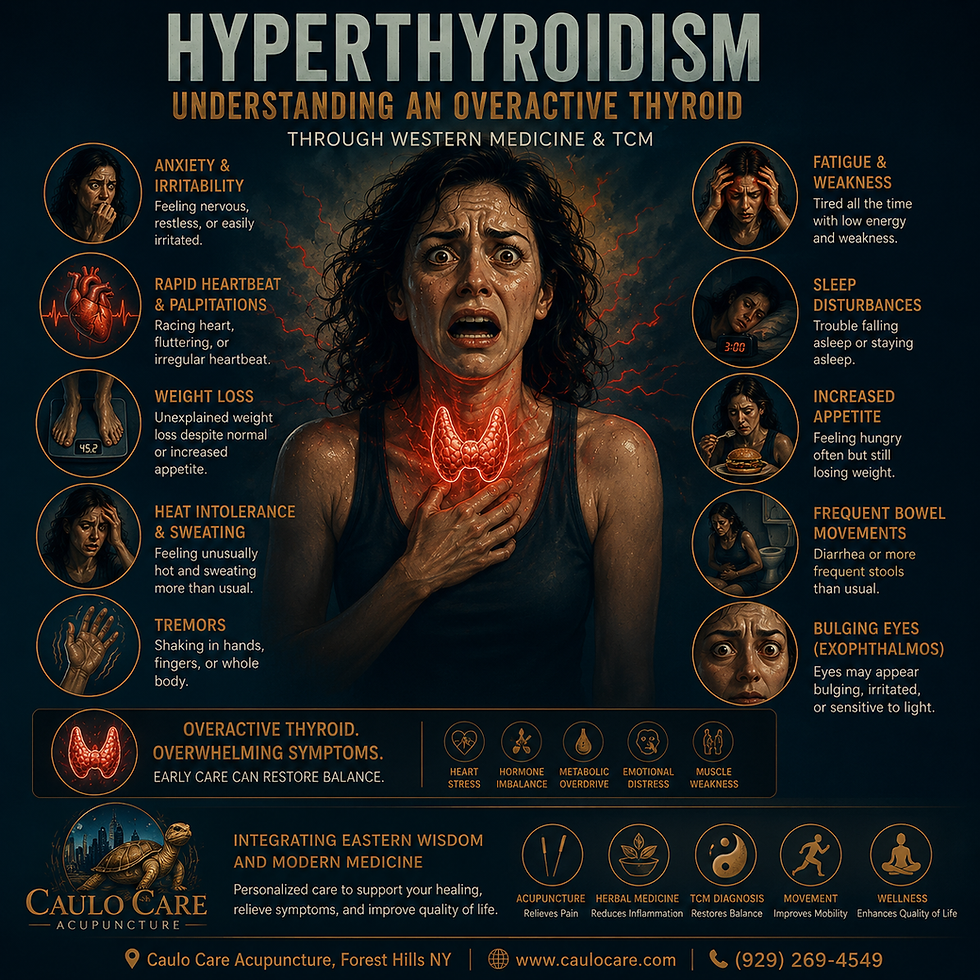
Hyperthyroidism: Understanding an Overactive Thyroid Through Western Medicine and Traditional Chinese Medicine (TCM)
By Dr. Phumlarp Caulo, LAc, MAcOM, DAHM
Caulo Care Acupuncture, Forest Hills, New York
Hyperthyroidism is a condition in which the thyroid gland produces excessive amounts of thyroid hormones, causing the body's metabolism to accelerate beyond normal levels. The thyroid gland, a butterfly-shaped gland located in the front of the neck, plays a critical role in regulating metabolism, body temperature, heart rate, energy production, digestion, mood, and many other physiologic processes.
When thyroid hormone levels become excessively elevated, the body essentially operates in a constant "overdrive" state. This can significantly affect cardiovascular, neurologic, digestive, musculoskeletal, and emotional health.
Understanding the Thyroid: Anatomy and Physiology (A&P)
The thyroid gland produces two primary hormones:
Thyroxine (T4)
Triiodothyronine (T3)
These hormones are regulated through the Hypothalamic-Pituitary-Thyroid (HPT) Axis:
The hypothalamus releases TRH (thyrotropin-releasing hormone).
The pituitary gland releases TSH (thyroid-stimulating hormone).
TSH stimulates the thyroid gland to produce T3 and T4.
Under normal conditions, this system maintains metabolic balance. In hyperthyroidism, excessive thyroid hormone production suppresses TSH levels while T3 and T4 levels rise.
Common laboratory findings include:
Low TSH
Elevated Free T4
Elevated T3
What Causes Hyperthyroidism?
Several conditions may lead to hyperthyroidism, including:
Graves' Disease
The most common cause of hyperthyroidism. Graves' disease is an autoimmune disorder in which antibodies stimulate the thyroid gland to produce excessive thyroid hormones.
Toxic Multinodular Goiter
Multiple thyroid nodules produce thyroid hormones independently of normal hormonal control.
Toxic Adenoma
A single overactive thyroid nodule produces excess hormone.
Thyroiditis
Inflammation of the thyroid gland can cause stored hormones to leak into circulation.
Excessive Thyroid Hormone Intake
Overuse or inappropriate dosing of thyroid hormone medications may also result in hyperthyroidism.
Signs and Symptoms
Because thyroid hormones affect nearly every organ system, symptoms may be widespread.
Common symptoms include:
Rapid heartbeat (tachycardia)
Palpitations
Anxiety and nervousness
Irritability
Tremors
Heat intolerance
Excessive sweating
Increased appetite
Weight loss despite eating normally
Frequent bowel movements or diarrhea
Difficulty sleeping
Muscle weakness
Fatigue
Thin skin
Menstrual irregularities
Patients with Graves' disease may also develop:
Bulging eyes (exophthalmos)
Eye irritation
Lid retraction
Dry eyes
Potential Complications
Untreated hyperthyroidism can place significant strain on the cardiovascular system.
Potential complications include:
Atrial fibrillation
Heart failure
Osteoporosis
Severe weight loss
Muscle wasting
Emotional instability
Thyroid Storm (medical emergency)
What Is Thyroid Storm?
Thyroid Storm is a life-threatening complication characterized by:
High fever
Extreme tachycardia
Severe agitation
Delirium
Heart rhythm abnormalities
Cardiovascular collapse
Immediate emergency medical treatment is required.
Conventional Medical Treatment
The primary goals of treatment are to reduce thyroid hormone production, control symptoms, and prevent complications.
Antithyroid Medications
Common medications include:
Methimazole
Propylthiouracil (PTU)
These medications reduce thyroid hormone production and help restore normal thyroid function.
Beta Blockers
Examples include:
Propranolol
Atenolol
Metoprolol
These medications do not treat the underlying cause but help control symptoms such as:
Rapid heart rate
Palpitations
Tremors
Anxiety
Radioactive Iodine Therapy
Radioactive iodine is commonly used to destroy overactive thyroid tissue. It is highly effective but may eventually lead to hypothyroidism, requiring lifelong thyroid hormone replacement.
Surgery
Thyroidectomy may be recommended for:
Large goiters
Obstructive symptoms
Medication intolerance
Certain cases during pregnancy
Lifestyle and Self-Care Strategies
Although medical treatment remains essential, lifestyle modifications may help support overall well-being.
Recommended
✓ Follow prescribed medications exactly as directed
✓ Attend regular laboratory monitoring appointments
✓ Prioritize adequate sleep
✓ Manage stress through relaxation techniques
✓ Eat balanced, nutrient-dense meals
✓ Maintain hydration
✓ Engage in gentle physical activity as tolerated
✓ Work closely with endocrinology and primary care providers
Limit or Avoid
✗ Smoking
✗ Excess caffeine
✗ Excess alcohol
✗ Energy drinks
✗ Chronic sleep deprivation
✗ High-stress environments when possible
Smoking is particularly important to avoid because it may worsen Graves' eye disease.
Hyperthyroidism from a Traditional Chinese Medicine (TCM) Perspective
Traditional Chinese Medicine does not classify hyperthyroidism as a single disease entity. Instead, practitioners identify underlying patterns of imbalance contributing to the patient's presentation. Common TCM patterns may include:
Liver Yang Rising
Symptoms may include:
Irritability
Anger
Headaches
Tremors
Palpitations
Liver Fire Blazing
Symptoms may include:
Heat sensations
Red face
Restlessness
Excessive sweating
Yin Deficiency with Empty Heat
Symptoms may include:
Night sweats
Anxiety
Insomnia
Heat intolerance
Dryness
Heart and Kidney Disharmony
Symptoms may include:
Palpitations
Poor sleep
Emotional instability
Fatigue
From a TCM perspective, prolonged emotional stress, constitutional weakness, overwork, and chronic imbalance may contribute to these patterns.
How Acupuncture May Help
Acupuncture is not a replacement for endocrinology care, laboratory testing, medications, radioactive iodine therapy, or surgery when medically indicated. However, many patients seek acupuncture as a complementary therapy to help manage symptoms associated with hyperthyroidism and improve quality of life. Depending on the individual presentation, acupuncture may help support:
Stress reduction
Relaxation
Sleep quality
Neck and shoulder tension
Headaches
Muscle tightness
General well-being
Emotional balance
Pain management associated with muscle tension and chronic stress
Treatment plans in Traditional Chinese Medicine are individualized and based on a comprehensive assessment rather than a diagnosis alone.
Hyperthyroidism: A Balanced Approach
Hyperthyroidism is a complex endocrine disorder that requires appropriate medical evaluation and ongoing monitoring. Early diagnosis and treatment can significantly reduce the risk of serious complications such as arrhythmias, heart failure, osteoporosis, and thyroid storm.
A comprehensive care plan may include endocrinology management, medication adherence, healthy lifestyle practices, stress reduction, and complementary therapies such as acupuncture when appropriate.
At Caulo Care Acupuncture, we frequently work with patients experiencing stress-related symptoms, muscle tension, headaches, sleep disturbances, and pain associated with chronic medical conditions. Our goal is to support overall wellness and comfort while patients continue receiving appropriate medical care from their healthcare team.
For individuals seeking a complementary approach focused on reducing stress, improving relaxation, and managing pain and tension, acupuncture may be a valuable addition to an integrative care plan.
This information is only educational and should not be construed as medical advice. Everything must be balanced, and the suggestions may not apply to you. A specialist doctor should be consulted for any medical advice or diagnosis.
BOOK AN APPOINTMENT NOW!
Acupuncture Near Me in Forest Hills, NY
🔶🔷🔶🔷🔶🔷🔶🔷🔶🔷🔶🔷
Dr. Phumlarp Caulo, LAc, MAc, OM, DAHM
Doctor of Acupuncture & Chinese Medicine
Caulo Care Acupuncture
📍 Forest Hills, Queens, New York
🔖 By Appointment Only
☎️ +1 (929) 269-4549
#DrCAcupuncture #DrCaulo #Acupuncture #Hyperthyroidism #GravesDisease #ThyroidHealth #TCM #ChineseMedicine #PainManagement #StressRelief #ForestHills #QueensNY #NewYork #CauloCare #AcupunctureNearMe #Wellness #IntegrativeMedicine


Comments