_edited.png)
_edited.png)
Why Anxiety Happens: Understanding Anxiety Through Western Medicine and Traditional Chinese Medicine (TCM)

By Dr. Phumlarp Caulo, L.Ac., MAc., OM, DAHM
Caulo Care Acupuncture – Forest Hills, New York
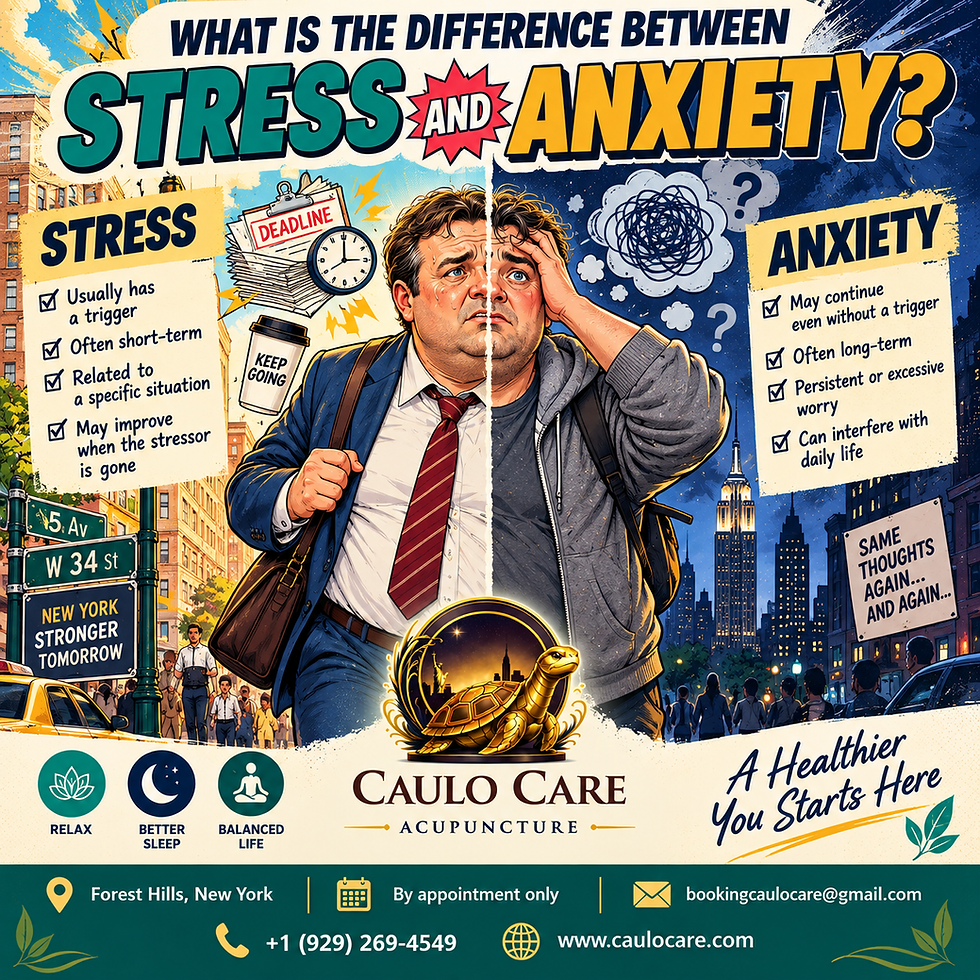
Anxiety is a normal human emotion that helps us respond to stress and potential danger. However, when anxiety becomes persistent, excessive, or begins interfering with work, relationships, sleep, and daily activities, it may develop into an anxiety disorder requiring proper evaluation and treatment.
What Happens in the Body? (Western Medicine)
From a Western medical perspective, anxiety is closely associated with dysregulation of the brain's fear and stress circuits, particularly the amygdala, hippocampus, and prefrontal cortex. Chronic stress activates the hypothalamic-pituitary-adrenal (HPA) axis, increasing cortisol and sympathetic ("fight-or-flight") activity. Over time, this may contribute to muscle tension, poor sleep, digestive disturbances, headaches, fatigue, palpitations, impaired concentration, and chronic pain.
Research also suggests that chronic stress and anxiety promote systemic inflammation, oxidative stress, autonomic nervous system imbalance, and altered neurotransmitters such as serotonin, GABA, dopamine, and norepinephrine, making symptoms more persistent if left untreated.
Understanding Anxiety in Traditional Chinese Medicine (TCM)
In Traditional Chinese Medicine, anxiety is not viewed as a single disease but as a pattern of imbalance involving the Heart (Shen), Liver, and Kidney, with the Spleen often contributing.
According to classical TCM:
Emotional stress causes Liver Qi Stagnation.
Prolonged stagnation generates Heat, disturbing the Shen (Mind).
Chronic stress may consume Heart Blood, Heart Yin, or Heart Qi, reducing the body's ability to anchor the Shen.
Constitutional weakness or long-term illness may weaken the Kidney, reducing resilience to stress.
Excessive worry may impair the Spleen, leading to fatigue, poor digestion, and brain fog.
Rather than treating only symptoms, TCM aims to restore balance between body and mind.
Prevention and Self-Care
Recovery from anxiety often requires multiple healthy habits working together.
Recommended:
Maintain consistent sleep habits.
Exercise regularly, especially walking and gentle aerobic activity.
Practice breathing exercises, meditation, or mindfulness.
Limit excessive caffeine and alcohol.
Eat balanced meals rich in vegetables, whole grains, lean protein, omega-3 fatty acids, magnesium, and B vitamins.
Stay socially connected and seek professional support when symptoms persist.
In TCM, warm, nourishing foods are generally preferred during chronic stress, while excessive cold foods, processed sugar, alcohol, and greasy foods may aggravate digestive weakness and Qi stagnation in susceptible individuals.
What Should You Avoid?
Avoid ignoring persistent anxiety symptoms, chronic sleep deprivation, excessive overtime, emotional suppression, heavy alcohol consumption, recreational drugs, excessive caffeine, and prolonged inactivity. These habits may worsen nervous system dysregulation and slow recovery.
How Can Acupuncture Help?
Growing evidence suggests acupuncture may help regulate the autonomic nervous system, reduce stress responses, improve sleep quality, relieve muscle tension, and decrease chronic pain while promoting relaxation. Within TCM, acupuncture works by regulating Qi and Blood, calming the Shen, reducing Liver Qi stagnation, and restoring balance throughout the body.
At Caulo Care Acupuncture, treatment is individualized based on your unique presentation rather than a one-size-fits-all approach. For many patients, reducing pain, improving sleep, and lowering physical stress can help support overall recovery and quality of life.
Educational Disclaimer
This information is intended for educational purposes only and should not be construed as medical advice. Every individual is different, and these recommendations may not apply to everyone. Please consult a qualified healthcare professional for medical evaluation, diagnosis, or treatment.
BOOK AN APPOINTMENT NOW!
🔖 By Appointment Only
☎️ +1 (929) 269-4549
Dr. Phumlarp Caulo, L.Ac., MAc.,OM, DAHM
Doctor of Acupuncture & Chinese Medicine
Caulo Care Acupuncture
References
Jorm AF, et al. Anxiety disorders and inflammation: a systematic review. Front Psychiatry. 2021. https://pmc.ncbi.nlm.nih.gov/articles/PMC7847562/
Armour M, et al. Acupuncture for anxiety: A systematic review and meta-analysis. 2018. https://pubmed.ncbi.nlm.nih.gov/29705474/
Keywords
#Anxiety #AnxietyDisorder #Stress #MentalHealth #ChronicStress #AutonomicNervousSystem #HPAAxis #Inflammation #TraditionalChineseMedicine #TCM #Acupuncture #PainRelief #StressRelief #SleepHealth #Burnout #LiverQiStagnation #HeartShen #ForestHills #QueensNY #CauloCare #DrCaulo #DrCAcupuncture #AcupunctureNearMe #ChineseMedicine #Wellness #NewYork #Massage #NoFault #HolisticHealth


Comments