_edited.png)
_edited.png)
What Is Burnout? Why Am I Always Tired? Is It Burnout or Something Else?
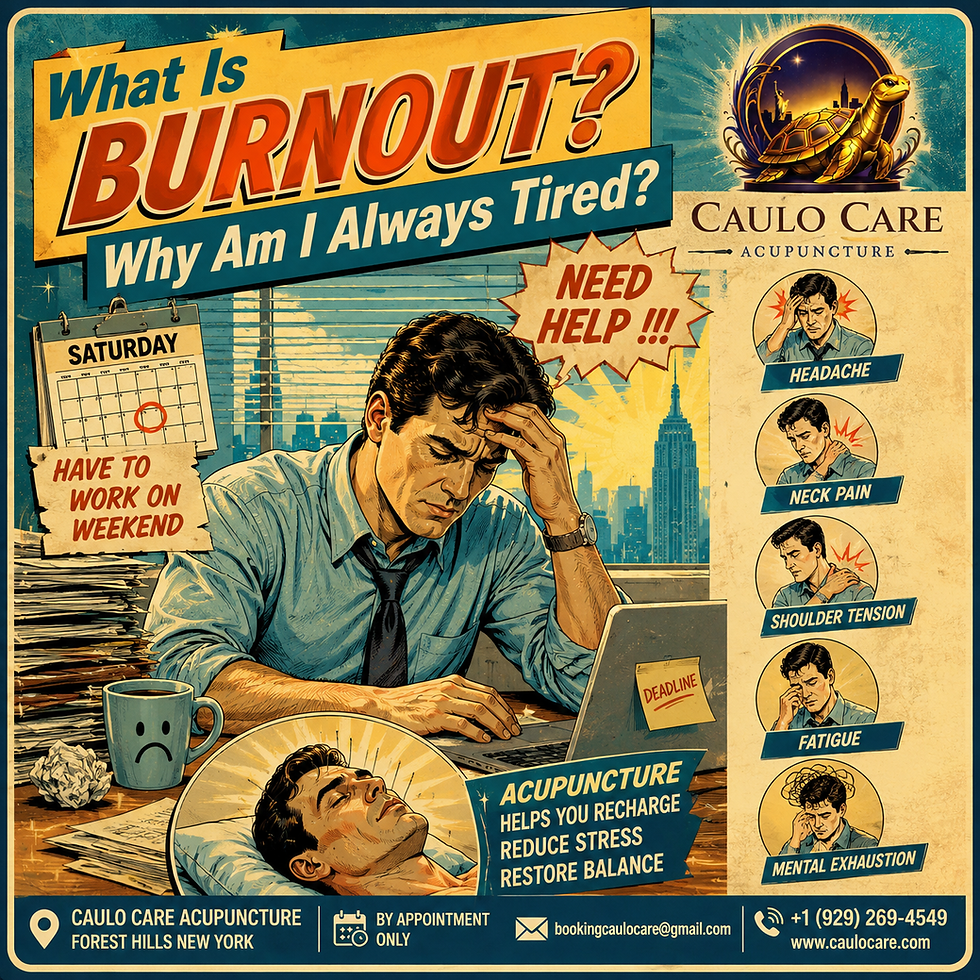
By Dr. Phumlarp Caulo, L.Ac., MAc, OM, DAHM
Doctor of Acupuncture & Chinese Medicine. Caulo Care Acupuncture – Forest Hills, New York
Why Do I Wake Up Tired Even After Sleeping 8 Hours?
"I slept for 8 hours, but I still wake up exhausted." If this sounds familiar, you're not alone.
Many people assume that feeling tired simply means they need more sleep. However, persistent fatigue despite adequate sleep may be a sign that something deeper is affecting your body. Burnout, chronic stress, poor sleep quality, nutritional deficiencies, hormonal imbalance, chronic pain, depression, anxiety, infections, medication side effects, and medical conditions can all contribute to constant exhaustion. Understanding the underlying cause is the first step toward recovery.
What Is Burnout?
Burnout is a state of physical, mental, and emotional exhaustion caused by prolonged or repeated stress. It develops gradually when the body's stress-response system remains activated for weeks, months, or even years without enough time to recover.
Burnout is not simply "being tired." It affects your brain, nervous system, hormones, immune function, sleep, digestion, mood, and overall quality of life.
People commonly experience burnout from:
Long working hours
Healthcare professions
Caregiving responsibilities
Parenting
Financial stress
Emotional trauma
Poor work-life balance
Chronic illness
Academic pressure
Constant digital stimulation
Common Burnout Symptoms
Burnout symptoms often include:
Feeling exhausted all the time
Waking up tired despite sleeping
Brain fog
Poor concentration
Forgetfulness
Low motivation
Irritability
Anxiety
Depression
Headaches
Muscle tension
Neck and shoulder pain
Digestive problems
Frequent illness
Poor sleep quality
Low exercise tolerance
Feeling emotionally numb
Many patients describe it as:
"I'm functioning... but I don't feel like myself anymore."
Western Medicine Perspective
How Does Burnout Affect the Body?
Burnout is strongly connected to chronic activation of the body's stress response.
When the brain perceives stress, the hypothalamus activates the hypothalamic-pituitary-adrenal (HPA) axis.
This triggers: Hypothalamus → Pituitary Gland → Adrenal Glands
The adrenal glands release:
Cortisol
Adrenaline
Noradrenaline
These hormones are lifesaving during emergencies.
However, when they remain elevated for long periods, the body begins to suffer.
What Happens Inside the Body?
Nervous System
The sympathetic nervous system ("fight-or-flight") remains constantly active.
This may cause:
Increased heart rate
Muscle tension
Poor digestion
Anxiety
Difficulty relaxing
Light sleep
Meanwhile, the parasympathetic nervous system ("rest-and-digest") becomes less active, making recovery more difficult.
Brain
Chronic stress affects several important brain regions.
Prefrontal Cortex
Responsible for:
Decision making
Planning
Memory
Concentration
Burnout can reduce its efficiency, leading to brain fog and poor focus.
Amygdala
Becomes more reactive, increasing:
Anxiety
Emotional sensitivity
Irritability
Hippocampus
Important for learning and memory.
Prolonged cortisol exposure may impair memory formation and emotional regulation.
Hormones
Long-term stress can disrupt:
Cortisol rhythm
Thyroid function
Blood sugar regulation
Reproductive hormones
Some people may also experience:
Weight gain
Weight loss
Menstrual irregularities
Reduced libido
Fatigue despite normal sleep
Immune System
Chronic cortisol dysregulation may contribute to:
Frequent infections
Slower healing
Increased inflammation
Autoimmune flare-ups in susceptible individuals
Sleep
Even if you sleep for eight hours, chronic stress often reduces sleep quality.
Common problems include:
Difficulty falling asleep
Frequent waking
Light sleep
Non-restorative sleep
Your brain never fully enters deep restorative sleep.
Could Something Else Be Causing Your Fatigue?
Always feeling tired does not automatically mean burnout.
Persistent fatigue should be evaluated because it may also be related to:
Iron deficiency anemia
Vitamin B12 deficiency
Vitamin D deficiency
Thyroid disorders
Sleep apnea
Diabetes
Chronic infections
Depression
Anxiety disorders
Heart disease
Medication side effects
Long COVID
Chronic fatigue syndrome (ME/CFS)
If fatigue is severe, persistent, or accompanied by weight loss, fever, chest pain, fainting, shortness of breath, or neurological symptoms, seek prompt medical evaluation.
Traditional Chinese Medicine (TCM) Perspective
Traditional Chinese Medicine views burnout as an imbalance rather than a single disease.
Depending on the individual, burnout may involve one or more patterns such as:
Qi Deficiency
Common symptoms include:
Low energy
Weak voice
Poor appetite
Fatigue after minimal activity
Shortness of breath
Blood Deficiency
Often presents with:
Dizziness
Poor memory
Pale complexion
Dry skin
Poor sleep
Yin Deficiency
May cause:
Night sweats
Feeling warm at night
Dry mouth
Restless sleep
Anxiety
Liver Qi Stagnation
Frequently associated with:
Emotional stress
Irritability
Chest tightness
Digestive discomfort
Muscle tension
Heart Shen Disturbance
Can contribute to:
Anxiety
Insomnia
Palpitations
Difficulty calming the mind
How Can You Recover From Burnout?
Recovery requires addressing both the cause of stress and supporting the body's healing process.
Prioritize Sleep Quality
Aim for:
Consistent sleep schedule
Cool, dark bedroom
Limited screen exposure before bedtime
Avoid caffeine late in the day
Quality matters more than simply sleeping longer.
Manage Stress Daily
Helpful techniques include:
Deep breathing
Meditation
Mindfulness
Prayer
Gentle stretching
Tai Chi
Qi Gong
Yoga
Spending time in nature
Even 10–20 minutes each day may improve nervous system regulation.
Exercise Wisely
Avoid intense exercise if you are severely exhausted.
Instead consider:
Walking
Swimming
Mobility exercises
Gentle resistance training
Gradually increase activity as your energy improves.
Eat Foods That Support Recovery
Protein
Helps repair tissues and stabilize blood sugar.
Examples:
Fish
Chicken
Eggs
Tofu
Lentils
Beans
Omega-3 Fatty Acids
May help support brain health and reduce inflammation.
Sources include:
Salmon
Sardines
Walnuts
Flaxseed
Chia seeds
Magnesium
Supports muscle relaxation and nervous system function.
Foods include:
Spinach
Pumpkin seeds
Almonds
Cashews
B-Complex Vitamins
Important for energy metabolism and nervous system health.
Sources include:
Eggs
Whole grains
Lean meats
Legumes
Vitamin D
Low vitamin D levels may contribute to fatigue in some individuals.
Sources include:
Fatty fish
Fortified dairy products
Safe sunlight exposure
Antioxidant-Rich Foods
Support recovery from oxidative stress.
Examples:
Blueberries
Strawberries
Leafy greens
Bell peppers
Broccoli
TCM Dietary Recommendations
Traditional Chinese Medicine often recommends warm, nourishing foods during recovery.
Examples include:
Chicken soup
Bone broth
Ginger
Chinese dates (Red Dates)
Goji berries
Black sesame
Sweet potato
Pumpkin
Oats
Millet
These foods are traditionally used to support Qi and Blood while promoting digestive health.
Individual recommendations should be based on a qualified TCM evaluation.
What Should You Avoid?
If you are experiencing burnout, try to reduce:
Excess caffeine
Alcohol
Smoking
Highly processed foods
Excess sugar
Skipping meals
Staying up late
Working without breaks
Overtraining
Constant phone or social media use before bed
These habits may worsen stress physiology and delay recovery.
How Acupuncture May Help Burnout
Acupuncture is commonly used as part of an integrative approach to managing stress-related symptoms. At Caulo Care Acupuncture, treatment is individualized based on both Western clinical understanding and Traditional Chinese Medicine pattern differentiation.
Depending on your condition, acupuncture may help support:
Relaxation and stress reduction
Better sleep quality
Neck and shoulder tension
Headaches
Chronic musculoskeletal pain
Improved sense of well-being
Emotional balance
Nervous system regulation
Energy recovery
Overall quality of life
Many patients also report feeling calmer, more mentally clear, and physically refreshed following treatment. Acupuncture works best when combined with healthy sleep habits, balanced nutrition, regular movement, stress management, and appropriate medical care.
Final Thoughts
Burnout is more than feeling tired—it is a whole-body response to prolonged stress that can affect the brain, hormones, immune system, nervous system, and emotional health.
If you continue waking up exhausted despite getting enough sleep, don't ignore the symptom. A comprehensive evaluation can help determine whether burnout, a medical condition, or another underlying issue is contributing to your fatigue.
Addressing burnout early through lifestyle changes, nutrition, stress management, appropriate medical evaluation, and integrative therapies such as acupuncture may help support recovery before symptoms become more severe.
Educational Disclaimer
This information is intended for educational purposes only and should not be considered medical advice. Every individual is different, and the information presented here may not apply to your specific situation. Please consult a qualified physician or licensed healthcare professional for diagnosis, treatment, and personalized medical recommendations.
Reference
World Health Organization (WHO). Burn-out an "occupational phenomenon": International Classification of Diseases (ICD-11). https://www.who.int/
American Psychological Association (APA). Stress Effects on the Body.
National Institute for Occupational Safety and Health (NIOSH). Stress at Work.
National Center for Complementary and Integrative Health (NCCIH).
Acupuncture. https://www.nccih.nih.gov/
Vickers AJ, et al. Acupuncture for Chronic Pain.
BOOK AN APPOINTMENT NOW!
Acupuncture Near Me – Forest Hills, Queens, New York
Doctor of Acupuncture & Chinese Medicine
Caulo Care Acupuncture
🔖 By Appointment Only
☎️ +1 (929) 269-4549
Helping patients relieve pain, reduce stress, restore balance, and improve overall wellness through personalized acupuncture and Traditional Chinese Medicine.


Comments